


Whether you are buying a diamond for an engagement ring, as a gift, or just to celebrate yourself, you’re practically guaranteed to hear about the “Four Cs.” This term refers to four characteristics: color, cut, clarity and carat. The Four Cs are the universal standards by which diamond quality is judged. It’s important for diamond shoppers to understand each of these characteristics, as well as how they all work together.
At Noe’s Jewelry in the Kansas City, Missouri area, we believe in empowering our shoppers with all the information they need to make a confident and educated buying decision. Over our next few blogs, we’ll do a deep dive into each of these characteristics and how they work to make a diamond beautiful. In this first installment, we’ll be covering diamond clarity.
What is Diamond Clarity?
Clarity refers to the presence (or absence) of natural flaws in a diamond. There are two types of flaws. Inclusions are internal flaws, and blemishes are external (surface-level) flaws. Almost every diamond contains some flaws. It is extraordinarily rare to find a “flawless” diamond. Mother Nature isn’t perfect, after all!
However, many diamond flaws are not visible to the naked eye. This is especially true for jewelry quality diamonds.

Types of Diamond Flaws
Diamond flaws can take many forms. Some common diamond flaws include:
Pinpoint Inclusions: Tiny black crystals grouped together within the diamond.
Mineral and Crystal Inclusions: As diamonds form, they may entrap tiny bits of other minerals or crystals within their structure.
Clouding: Groups of multiple crystals within the diamond that create hazy streaks.
Feathering: Tiny cracks within the internal structure of the diamond.
Cavity: Small pits on the surface of a diamond.
Chip: Small, shallow breaks along the surface of a diamond.
Nick: Notch-like breaks specifically located in the girdle (widest part/perimeter) of the diamond.
Natural: A rough portion on the diamond’s surface resulting from poor polishing.
Two diamonds with the same clarity grade can look different, because inclusions vary in:
- Type (crystal, cloud, pinpoint, etc.)
- Size
- Color (darker inclusions are more visible)
- Location (central inclusions are more visible than inclusions located on the edges of the diamond)
- Quantity
This is why seeing a diamond in person, and especially with a jeweler who can explain what you are looking at, matters so much.
And remember, almost all diamonds have some flaws! The purpose of diamond clarity grading is not to find a “perfect” stone. It’s to help you understand how these small imperfections can impact a diamond’s brilliance (sparkle), structural integrity, and monetary value. To help explain all of this, let’s talk about how diamond clarity is graded.

Diamond Clarity Grading Scale
The diamond industry follows a standardized grading system, most commonly the Gemological Institute of America’s (GIA) version. The GIA’s grading scale evaluates the clarity of a diamond under 10x magnification. This is a level of magnification far higher than the naked eye can detect. East grade has its own abbreviation, which we’ll include here, too. These are the official clarity grades, ordered from highest to lowest:
Flawless (FL): No inclusions or blemishes visible, even under 10x magnification. Less than 1% of diamonds meet this qualification. That includes both lab grown and natural diamonds.
Internally Flawless (IF): No internal inclusions, but may have minor surface blemishes, none of which are visible to the naked eye.
Very, Very Slightly Included (VVS1 and VVS2): Extremely small inclusions that are very difficult to detect, even under 10x magnification. The flaws in VVS1 diamonds are less visible than those in VVS2 diamonds, but neither have flaws visible to the naked eye.
Very Slightly Included (VS1 or VS2): Small inclusions that are hard to detect even under 10x magnification. The flaws in VS1 diamonds are less visible than the flaws in VS2 diamonds, but neither have flaws visible to the naked eye. VS diamonds are considered the ideal options for buyers who want exceptional quality without an exorbitant price tag.
Slightly Included (SI1 or SI2): These diamonds have inclusions that can be noticed under 10x magnification. Most SI are still “eye-clean,” meaning that their inclusions cannot be seen without magnification. However, some S2 diamonds may have inclusions visible to the naked eye.
Included (I1, I2, and I3): These diamonds have inclusions that are easily visible under magnification, and often visible to the naked eye. They may impact the brilliance and even the durability of the diamond.
Why Clarity Matters: Beauty, Value, and Structural Integrity
Clarity impacts a diamond in three main ways.
- Beauty
Clarity affects how light moves through a diamond. Specifically, it can alter a diamond’s brilliance (sparkle). Inclusions can interrupt the flow of light through the diamond, and that can reduce sparkle or create shadows (areas within the diamond that do not reflect light).
However, not all inclusions impact a diamond’s beauty. Some inclusions are too tiny to make any aesthetic impact. Others are larger and sit near the center of the diamond, which leads to a greater impact. This is why having the help of a professional jeweler (like the experienced team here at Noe’s) is so important. - Value
Rarity drives price, and diamonds with fewer inclusions are rarer. Naturally, they are more expensive. As mentioned in the previous section, diamonds in the VS (very slightly included) range are often touted as the best option for shoppers who don’t want to sacrifice beauty for budget. - Structural Integrity
While most inclusions do not affect a diamond’s durability, some do. Large “feathers,” cavities, or cracks can weaken the stone. Shoppers mostly need to worry about clarity at the “Included” (I1, I2, or I3) level. If you ever have questions or concerns about a diamond, it is always best to ask a professional!

What is an “Eye-Clean” Diamond?
One of the most important ideas in clarity grading is that of “eye-cleanliness.” “Eye-cleanliness” refers to how the diamond looks to the naked eye from a normal viewing distance.
This concept is important, because an eye-clean diamond with an SI1 grading can look identical to a VS2 diamond during everyday wear. Understanding eye-cleanliness can potentially save you lots of money on your diamond purchase.
This is just one reason why it’s so important to see a diamond in real life. A diamond’s real-world appearance can have a huge impact on its price. Our goal is to help you find a diamond that looks flawless, even if its grading tells a more nuanced story.
How Much Should You Spend on Clarity?
Clarity is important, but can you put a price tag on it? While we recommend opting for a diamond with a slightly higher clarity grade, we–and most diamond experts–recommend investing most in a high quality diamond cut, which can disguise many flaws.
Diamonds in the VS1-VS2 range almost always appear eye-clean, especially when paired with the right cut and setting. Overall, here are our major tips for shopping when it comes to diamond clarity:
- Prioritize cut first. A good diamond cut impacts your stone’s brilliance more than anything else!
- Choose a clarity grade that is eye-clean (VS1 and VS2 are great options).
- You may want to pay for higher clarity if you highly value rarity in a diamond.
Clarity and Diamond Shape
Some diamond shapes hide inclusions better than others. Here’s a breakdown:
- Brilliant cut shapes feature many small facets to best reflect light. They sparkle more brilliantly than diamonds of any other cut. Their incredible sparkle masks inclusions very well. Brilliant cut shapes include round, oval, cushion, radiant, and pear shaped diamonds.
-
Step cut shapes such as emerald and Asscher shaped diamonds have large, open facets that make inclusions easier to see. Clarity becomes more important when looking for a step cut diamond.

Clarity in Lab Grown Diamonds
Kansas City jewelry buyers are increasingly exploring lab grown stones, so it’s important to discuss clarity specifically regarding lab diamonds. It’s a common misconception that lab grown diamonds cannot contain inclusions because they are created in a controlled environment. Although they are grown in a clean lab setting, lab grown diamonds often still have inclusions.
It is impossible to create a completely perfect environment for diamond growth (at least for now). However, lab diamonds are still less likely to come into contact with potential contaminants or microscopic traces of other minerals. So, they often have fewer inclusions than natural diamonds.
In general, lab grown diamonds are less expensive than natural diamonds (though this depends on the size and quality of any given diamond). You may be able to find lab grown diamonds with higher clarity grades at lower prices.
Why Work With A Local Kansas City Jeweler
Online diamond shopping has become popular, but hands-on guidance, especially when it comes to clarity, really does matter. Viewing a diamond under magnification, comparing your options side-by-side, and speaking with a professional jeweler can help you make a truly informed decision. Online images (and even videos) simply can’t compare to an up close and personal look at a diamond.
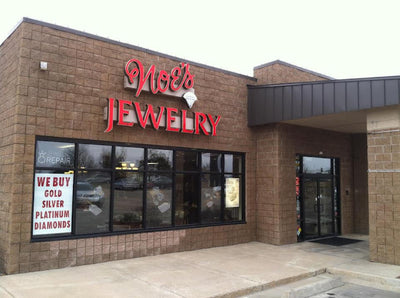
At Noe’s Jewelry, located in Raymore, Missouri, we take the time to explain what each clarity grade means in real life. We’ll show you as many examples as you would like to see so that you can compare diamonds in real time, and get a better grasp on how diamond clarity grades appear in real life. We can also help you prioritize your budget based on which characteristics matter most to you in a diamond.
If you’d like to see different clarity grades in person and start exploring your options, please come visit us at our conveniently located Raymore, MO store. Our friendly, educated professionals are always happy to guide you, answer questions, and help you find that diamond that’s just right for you.